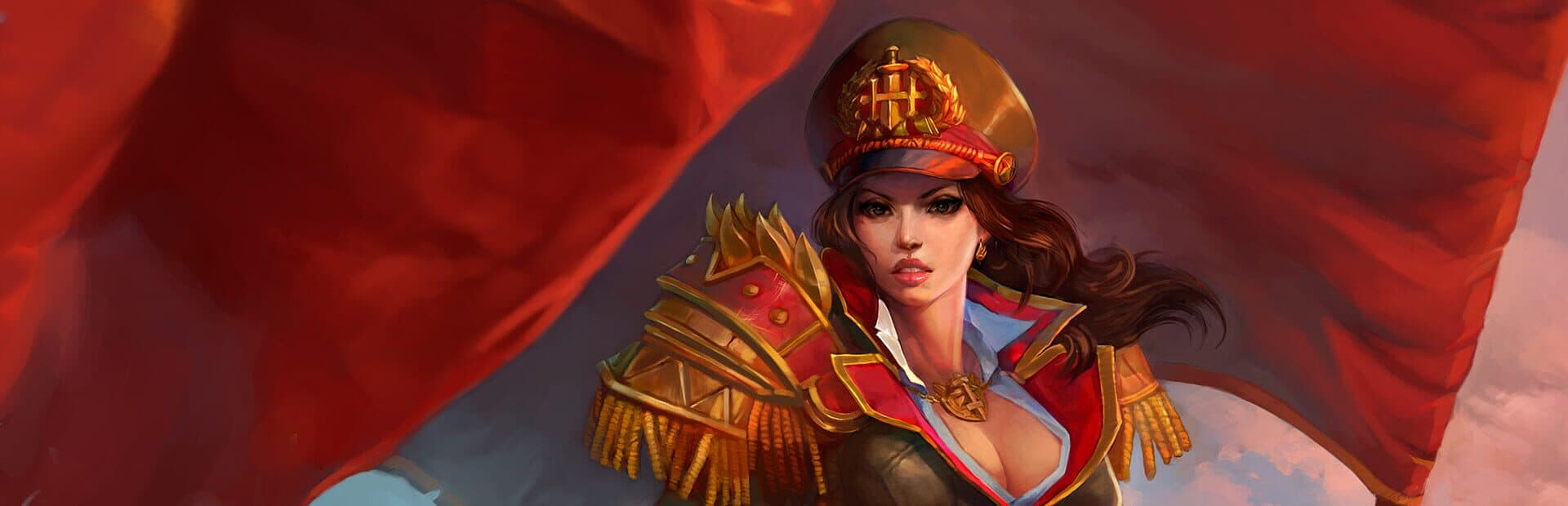
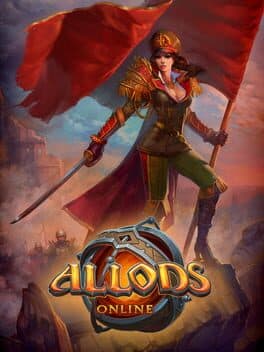
Allods Online
About the game
Allods Online is a free-to-play MMORPG set in Sarnaut, a world that came apart at the seams: its continents were left drifting as islands inside the Astral, a hostile magical ocean separating one fragment from the next. Crossing it isn't a loading screen with a pretty animation — it's the activity that defines the game, done aboard armed ships that only fire on all cylinders when a crew splits up the helm, the guns and the engine room.
Underneath that layer sits a very traditional fantasy MMORPG, and that isn't a flaw: two warring factions — the Empire and the League — seven races, ten classes, quests, dungeons, raids and large-scale PvP arenas. It's built by Russian studio Allods Team, which opened it in 2010 (2011 in the West, 2016 on Steam), and published today by MY.GAMES on its official site. The mix is deliberately odd: Slavic-flavoured fantasy, space opera, and a naval layer no other big MMORPG ever copied.
The Astral, the part that resembles nothing else
The Astral is the space between islands and it works as a continent of its own: you sail it, explore it, fight in it and lose cargo out there. Ships are built, outfitted and upgraded, and every station aboard does something real, so a trip with a coordinated crew plays nothing like a solo run. Hanging off that ocean are the allods — chunks of land with their own content — plus ship-versus-ship encounters, the reason a lot of guilds still exist at all. It's slow and rough next to the comfort of a modern MMORPG, and it's exactly what keeps the game from being interchangeable with any other.
Where it stands today
Fifteen years on, it's still under real development. The publisher ships a major version roughly every four months, plus events and promotions almost weekly: the 16.x line, opened in late 2025 with Xadagan, rebuilt gear and progression around mini-seasons and raised the level cap to 115, and the following release continued the story and reworked several classes. Technically, the 64-bit client landed in 2025 and is now the default; the 32-bit one is retired with update 17.0.
The problem isn't the development — it's the visibility. There's been no public roadmap since 2023 and the Steam page is all but abandoned, with no official posts since it arrived, so a game that's alive looks like the opposite. Population doesn't help the first impression either: two international servers remain after years of successive merges, and the Steam concurrent count is measured in dozens. That figure undercounts badly, since most players log in through the publisher's own launcher, but the honest takeaway holds: this is a populated small MMORPG, not a crowded one.
What you pay for and what you don't
The free server, New Frontier, carries the full shop and makes no apologies for it. You buy crystals — on the order of a euro cent apiece — and spend them on random boxes holding ornaments that raise power and resistance or unlock extra accessory slots, on chips to craft and level runes (thirteen tiers, six equipped, a slice of damage per tier), on outright gacha, and on top-up bonuses that reward spending in bulk. None of it is cosmetic: it's character power, and it sets the competitive ceiling for anyone playing there.
On top of that runs the Premium system, the least-discussed and most direct vector: it automatically tallies everything you've spent on crystals, splits it into eight tiers, and hands out high-level fragile runes in the middle brackets. The fine print is what matters — it resets on the 25th of every month: that power isn't kept, it's rented, and renewing it means paying again. The exact money thresholds aren't published; the mechanics are, in the Premium system FAQ. Add a season pass, the Battle Campaign, with a free track and an optional paid ticket, running once or twice a year for a couple of months.
The official alternative is Smuggler's Paradise, a subscription server with a seven-day free trial where gear, rubies and runes drop from playing. It's the better door in for anyone who doesn't want to measure their character against a shop — with one caveat worth knowing: since update 16.0 it isn't microtransaction-free either, carrying its own boutique of styles and services with its own currency, though the publisher maintains nothing sold there directly improves your character. The official FAQ still says that server has no shop "of any kind", and that stopped being accurate. The subscription price isn't public outside the client either: what's known comes from players, in the range of a few dollars a month.
Who it's for (and who it isn't)
It's for anyone after an old-school fantasy MMORPG — long levelling, classes with real identity, dungeons and raids — with one genuinely distinct idea on top, and for anyone who hears "crewed astral sailing" and pictures a full night out with the guild. It's for patient players, too: the pace is slow and the game explains its own systems poorly. It isn't for anyone wanting current-gen visuals, a modern interface or instant matchmaking, nor for anyone who needs a large Spanish-speaking community: the international client is in English and the player base is modest. If the doubt is about the wallet, the practical advice is simple — try the subscription server before the free one.
Its scar is an old one and worth naming: in 2010 the western cash shop launched with pricing so aggressive it drove off much of the audience the game had just won, and fifteen years later the conversation still revolves around how much progress you earn versus how much you buy. Add that the Russian version passed to a different publisher and now runs as a parallel universe, on its own platform, with no transfers either way. All of it on the table: behind the neglected storefront there's a living, strange MMORPG with no direct substitute — as long as you walk in with the maths clear, because the free server isn't the friendly one, and the friendly one costs money.
Screenshots
Artworks
Videos
Community reviews
Nobody has reviewed this game yet. You can be the first.