Fiesta Online
About the game
Fiesta Online is a free-to-play anime MMORPG that launched in Korea in 2006 and is somehow still standing almost twenty years later, these days under gamigo. It's a game from another era and doesn't pretend otherwise: a bright cel-shaded world, six classes covering the usual roles, and progression built to make the road a long one. Anyone looking for a modern MMORPG with current-gen production and a fast opening stretch will bounce off it; anyone who wants a world that never changed its mind in two decades, and a small community where people know each other, will find something that's genuinely hard to come by now.
Isya, six classes and old-school Korean grind
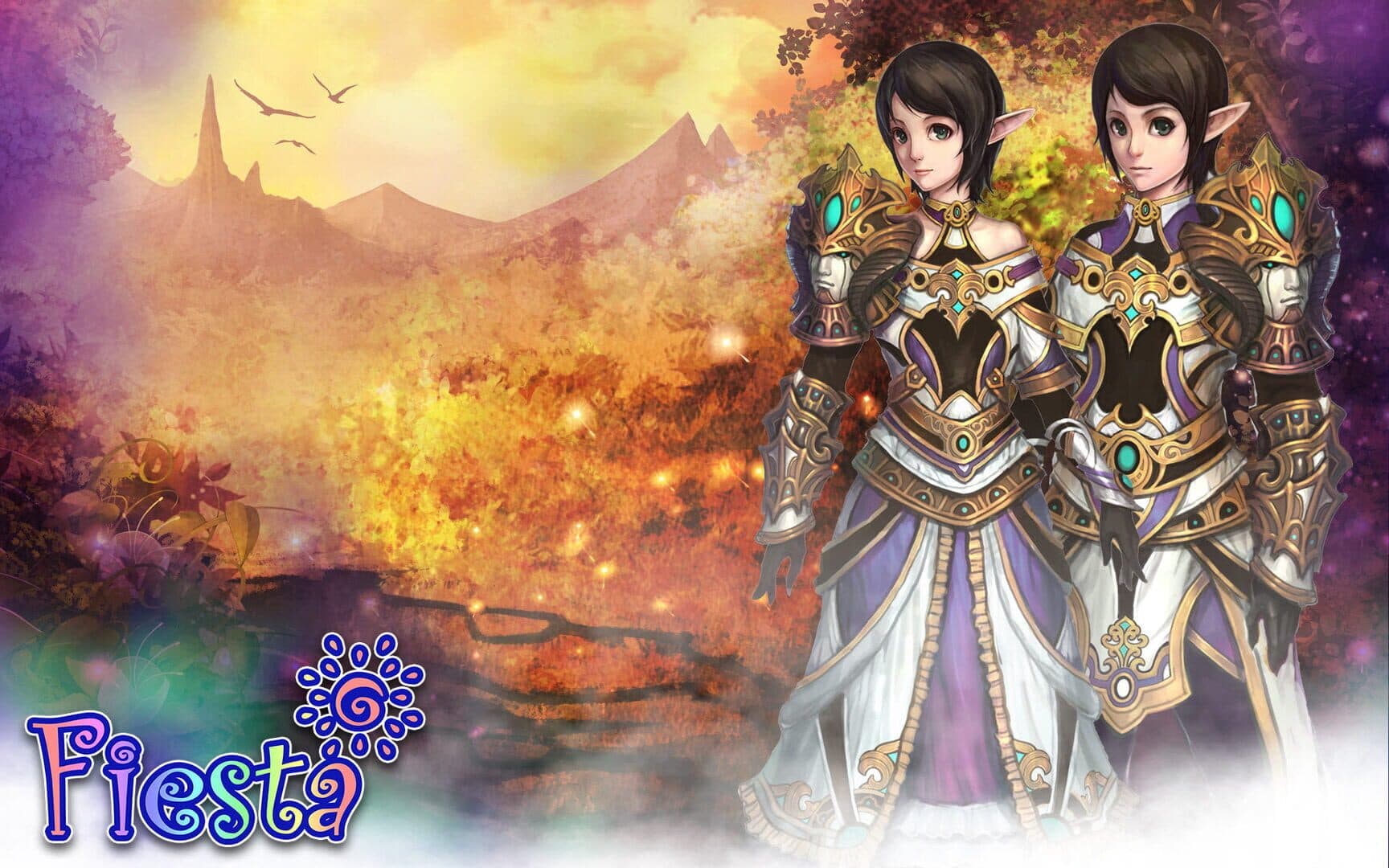
The world is called Isya, and it's colorful fantasy with no grimdark pretensions: green fields, postcard towns and bosses with oversized silhouettes. There are six classes — fighter, cleric, archer, mage, trickster and crusader — covering the genre's classic roles: tank, heal, shoot from range, hit hard. Progression follows the 2000s Korean template: kill a lot, level slowly, feel every ding. The cap sits at 145, and getting there is a months-long project, not a weekend one. That can read as a flaw, and partly it is, but it also explains why the people who stick around tend to stay for years.
The social heart is the Kingdom Quests, large-group instances where the server piles in to clear waves and compete for score. They're the best way to level, the best way to gear up and, above all, the place you actually meet people. Around that sit guilds, PvP in the Abyss zones, crafting and alchemy, mounts, pets, in-game weddings and a master-and-apprentice system built so a veteran can walk a newcomer through the early levels. None of it is innovative in 2026, but it's all wired together and has been working for years, which for an aging MMO counts for something.
What you pay for and what you don't
The game is pure free-to-play: download it for free on Steam or from the official site, with no subscription and no up-front purchase. The money comes from the item shop, fed by several premium currencies — Slime Coins chiefly, plus Fiesta Tokens, Hydro Coins and Western Coins — bought with real money. The catalogue runs from the purely cosmetic (costumes, mounts, style overlays) to things that genuinely move the needle: enhancement stones, experience boosters, stat items on a timer — usually 30 days — and random-reward boxes, alongside services like server-to-server character transfers.
It's worth being blunt here, because it's the community's most repeated complaint: the first eighty-odd levels play just fine for free, with no real friction, but at the top end the economy is inflated and competitive gear is essentially out of reach without going through the shop. A good share of the negative reviews describe the endgame as pay-to-win, and that isn't an exaggeration. As a casual, social game, free is plenty; as a game for high-level PvP, assume you'll be spending.
Where it stands: alive and patched, but thin on players
Fiesta Online is actively supported, which for a 2006 MMO is no small thing. gamigo ships patches and events at a roughly monthly cadence: seasonal events all year round, quality-of-life work — a movable party UI, mount tweaks, a style-overlay system that separates cosmetics from gear — and high-level content, including the cap raise to 145 with the Valtara zone, a solo dungeon and new dailies for the 140+ stretch. There's also a console version announced for PlayStation 5, Xbox Series X|S and Nintendo Switch, with its own site, though still no date and no word on servers or crossplay.
The weak spot is population. After years of merges the servers are consolidated — Isya is the only one with real life in it — and concurrents are counted in the dozens during quiet hours. The community skews veteran and high-level, which leaves the lower brackets fairly empty: you can play solo halfway to cap without running into anyone. Steam reviews mirror that mix: 'Mixed', around 63% positive, praising the atmosphere and the Kingdom Quests, complaining about the shop and the grind.
So who is it for? For anyone nostalgic for mid-2000s Korean MMORPGs who wants to revisit one that's still maintained; for anyone after a friendly, zero-friction world to level through slowly while chatting; and for groups of friends who want something free and light enough to run on any machine. It's not for anyone expecting modern combat, a big population, or a fair endgame without opening their wallet. With those cards on the table, Fiesta Online is still an honest option: it's worth exactly what it costs to start, which is nothing, and the rest depends on how much you care about reaching the top.
Screenshots
Artworks
Videos
Community reviews
Nobody has reviewed this game yet. You can be the first.