Age of Wushu
About the game
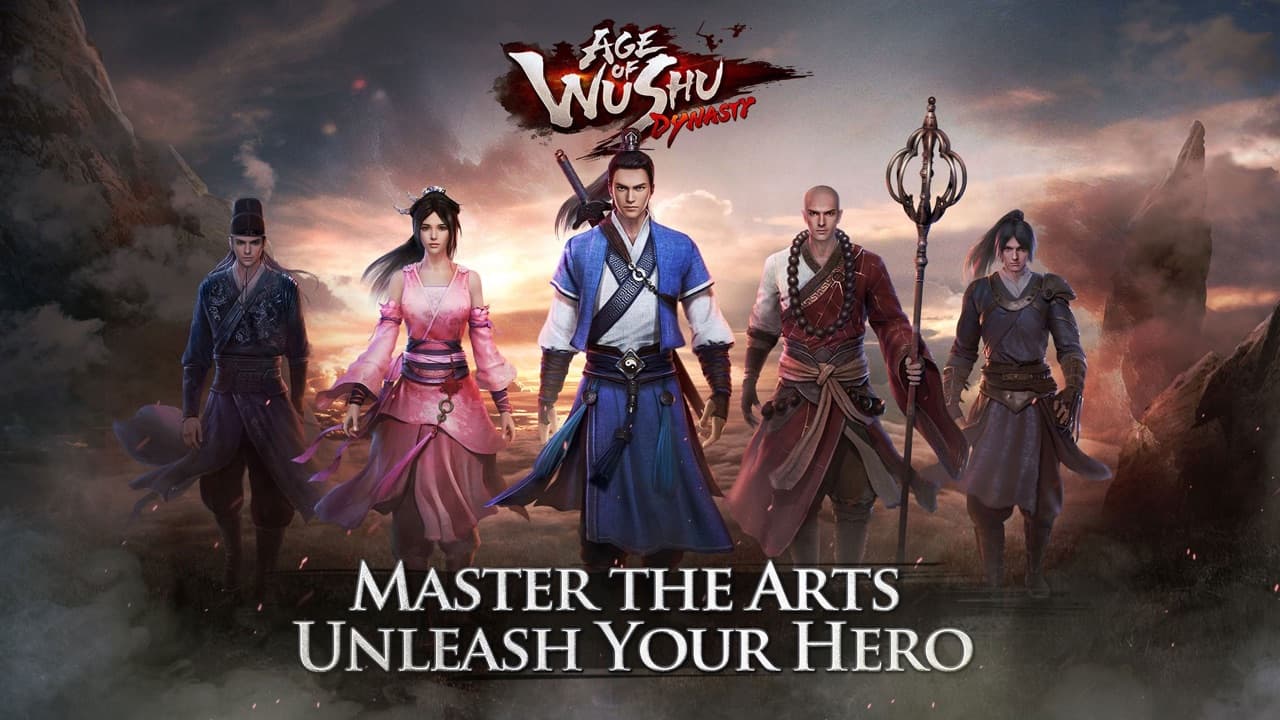
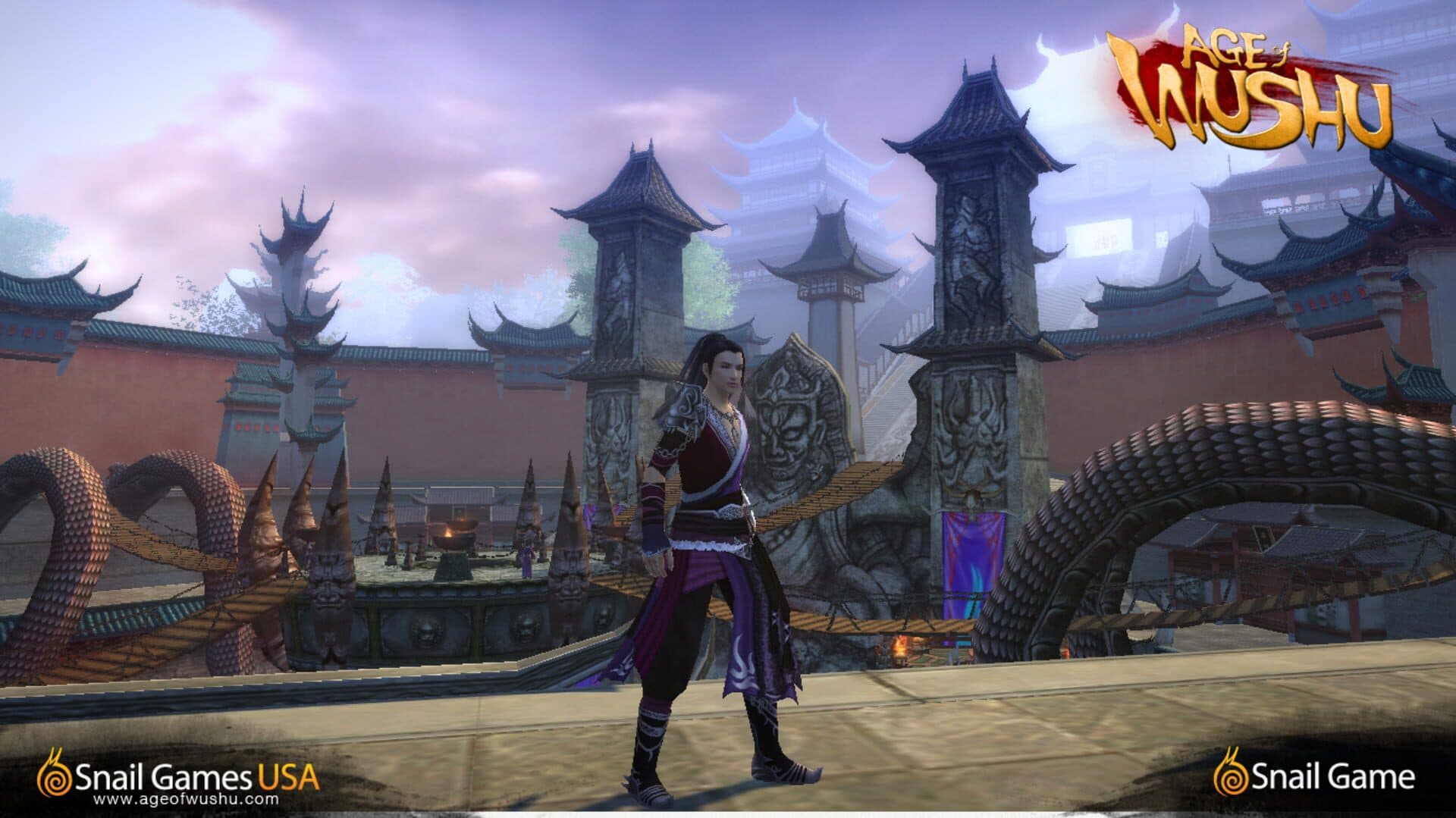
Age of Wushu is a sandbox MMORPG set in Ming-dynasty China, told through the grammar of wuxia cinema: characters run up walls, glide across rooftops and skim over lakes on the surface of the water. There are no classes and no levels in the usual sense. You pick one of eight schools —Shaolin, Wudang, Emei, the Beggars' Gang, the Tang Clan and the rest— and progress by cultivating skills with points earned from almost any activity: fighting, working a trade, playing the server's political intrigue. It is developed by Snail Games, which launched it in China in 2012 as 九阴真经 and brought it to North America on April 10, 2013.
Combat about reading, not about gear
Combat runs on a rock-paper-scissors loop of strike, feint and block: each option beats one and loses to another, so duels are decided by timing and by reading your opponent, not by gear stats. On top of that base sit each school's skill sets, with their own animations, ranges and movement tricks. It punishes autopilot, and when it clicks it feels closer to a fighting game with a free camera than to the button rotations of a classic MMO.
The world keeps turning while you are logged off
What made Age of Wushu famous is not its combat but its persistent world. When you log off, your character does not vanish: it stays in offline mode working, training or running an errand, and in that state other players can kidnap and sell it as labour. The list goes on: spies infiltrating a school to steal its skill manuals, accusations that land someone in jail, sentences at the executioner's block, robberies, rescues and vendettas that simmer for weeks. A good share of the game's actual content was not written by the studio: it is written by the alliances and betrayals between players.
What you pay for and what you don't
It is free to play with no box price: you download the client from the official site and play for free. Monetization sits in the gold ingot store and in the VIP subscription, around $9 a month, which is effectively mandatory if you want to play seriously — it unlocks offline cultivation, expands storage and speeds up progression. Much of what is sold is not permanent but time-limited rental —skill sets, mounts, cosmetics— so the spending renews itself. And gold bought with real money converts into liang, the in-game currency: that gateway is the root of the pay-to-win reputation it has carried since launch, and it is worth taking seriously, because the top of the leaderboard tends to match whoever spent the most. Since October 2014 you can neither pay nor play through Steam: everything goes through a Snail Games account.
Where it stands today
It is still running, but with minimal Western support. A single official server remains, Blue Dragon, hosted in Dallas; the launcher still shows a "new servers coming soon" line that has long been dead text. The European version shut down in 2017 and the Russian one in 2018, with players migrating to Snail's servers. The clearest technical signal of recent years is the move to a 64-bit client in October 2024, which cut down crashes by allowing more than 4 GB of RAM.
New content trickles in from the Chinese version —expansions like Kunlun Sect & Tianya Pavilion (2024) or Tsing Yi Court & Tianlun Temple (2025)— but almost always with no English patch notes and no formal announcement; the official YouTube channel was taken down in 2023, and there is no public roadmap or committed release cadence. The population is small and mostly veterans: the figures that circulate come from community trackers, not official numbers, so treat them with caution. Snail, meanwhile, has its attention elsewhere, including two spiritual successors announced for the Chinese market, Nine Yin Sutra: Wushu and Nine Yin Sutra: Immortal, with no date or confirmation of a Western release.
Who it's for (and who it isn't)
It is for players after a hostile PvP sandbox where the drama is generated by other people: guilds spying on each other, schools stealing each other's techniques, server politics with consequences that last for months. It is also for anyone who enjoys the wuxia fantasy on its own terms, because few MMORPGs make simply crossing the map this satisfying. And it is for the patient player: the web of skills, trades, reputations and timed events is enormous and poorly explained, so learning it is part of the deal.
It is not for anyone looking for a guided PvE MMO with a clean tutorial and orderly progression, nor for anyone unwilling to accept that progress leans on a subscription and a store with real influence on balance. Nor is it for players who need a game with a visible future: today Age of Wushu is a time capsule kept alive by a small, stubborn community, full of ideas no later MMORPG dared to copy and maintained just enough to keep the lights on. If those ideas matter to you more than the state of preservation, it is still worth the visit; if not, it is an expensive museum to walk through.
Screenshots
Videos
Community reviews
Nobody has reviewed this game yet. You can be the first.