Dark Age of Camelot
About the game
Dark Age of Camelot launched on October 9, 2001, and it is still the benchmark faction PvP gets measured against. Its core idea is simple and remains oddly rare: three realms — Arthurian Albion, Norse Midgard and Celtic Hibernia — fight over the same frontier map, and none of them can ever quite run away with it. The moment two gang up on whoever is ahead, the third one punishes them for it. That triangle, not the solo content, is the game.
The war for the Frontiers
Realm vs Realm is not a side mode; it is the reason the game exists. Realms take towers and keeps, hold them with garrisons and honest sieges — rams, catapults, doors that have to come down — and push for the enemy's relics, which grant realm-wide permanent bonuses to whoever guards them. The prize everyone covets is Darkness Falls, a sprawling dungeon whose door opens only for the realm currently winning the war: losing the map means losing the best farming spot in the game, which is why even a minor tower fight carries weight. Every enemy kill feeds realm points, which turn into realm ranks and exclusive abilities that players stack up over years.
Getting there means a classic PvE climb to level 50, plus the progression layers the expansions piled on — Champion Levels, Master Levels, endgame gear — and a class system built around sharply defined roles: healers who heal and little else, crowd control that can decide an entire fight on its own, assassins who live off the ambush. The unit of measurement in RvR is the eight-player group, and that is where the game still separates itself: interrupting, purging and chaining crowd control at the right instant matters more than gear or level. The seven expansions released up to Labyrinth of the Minotaur are included at no extra cost, so nobody arrives too late to locked-off content.
What you pay for, and what you don't
The model is hybrid, and it is worth understanding before installing anything. A Veteran subscription runs $14.95 for one month and drops to around $11.45 a month on the annual plan. Alongside it sits Endless Conquest, a free account with no expiry date that does not even ask for a credit card and that, after the latest round of unlocks, allows every race and class, maximum level and maximum realm rank, Champion and Master Levels, and endgame gear. What a free account still cannot do: housing (personal or guild), every tradeskill except Bountycrafting, selling on the Market Explorer — buying is fine — and veteran or holiday event rewards; it also carries a 30-second cooldown between messages on public channels and a four-hour wait to switch realms after scoring RvR kills. The fine print lives in the Endless Conquest FAQ. There are no loot boxes and no cosmetic shop: the client comes straight from the official site, and the game is not on Steam.
Where the game stands today
The game is live and maintained by Broadsword Online Games, the studio that inherited it in 2014 when EA shut down Mythic Entertainment. The cadence is slow, and that deserves saying plainly: one or two major patches a year, published with their patch notes on the official site and tested first on the Pendragon test server. The most recent one brought the Endless Conquest unlocks and a new Realm Rank 15 as the ceiling of realm progression. Between patches the calendar is carried by events that rotate through the servers almost monthly: old frontiers reopened, one-off world bosses, rewards aimed at veteran accounts. There is no public roadmap beyond that — what's coming gets announced when it arrives.
The server structure is small and deliberate. Nearly everyone plays on the Ywain cluster, ten servers sharing RvR zones and mainlands so the population concentrates instead of scattering; Gaheris is the cooperative server where all three realms run PvE together, and Ellan Vannin uses open PvP rules and hosts a good share of the events. The population is low: public trackers put it in the neighbourhood of 150 concurrent players, peaking in European and North American evenings and thinning out sharply outside those windows, though the twelve-month trend has been upward. It should also be said that a chunk of the veteran community plays on unofficial servers with their own rulesets, outside the Broadsword circuit entirely.
Who it's for (and who it isn't)
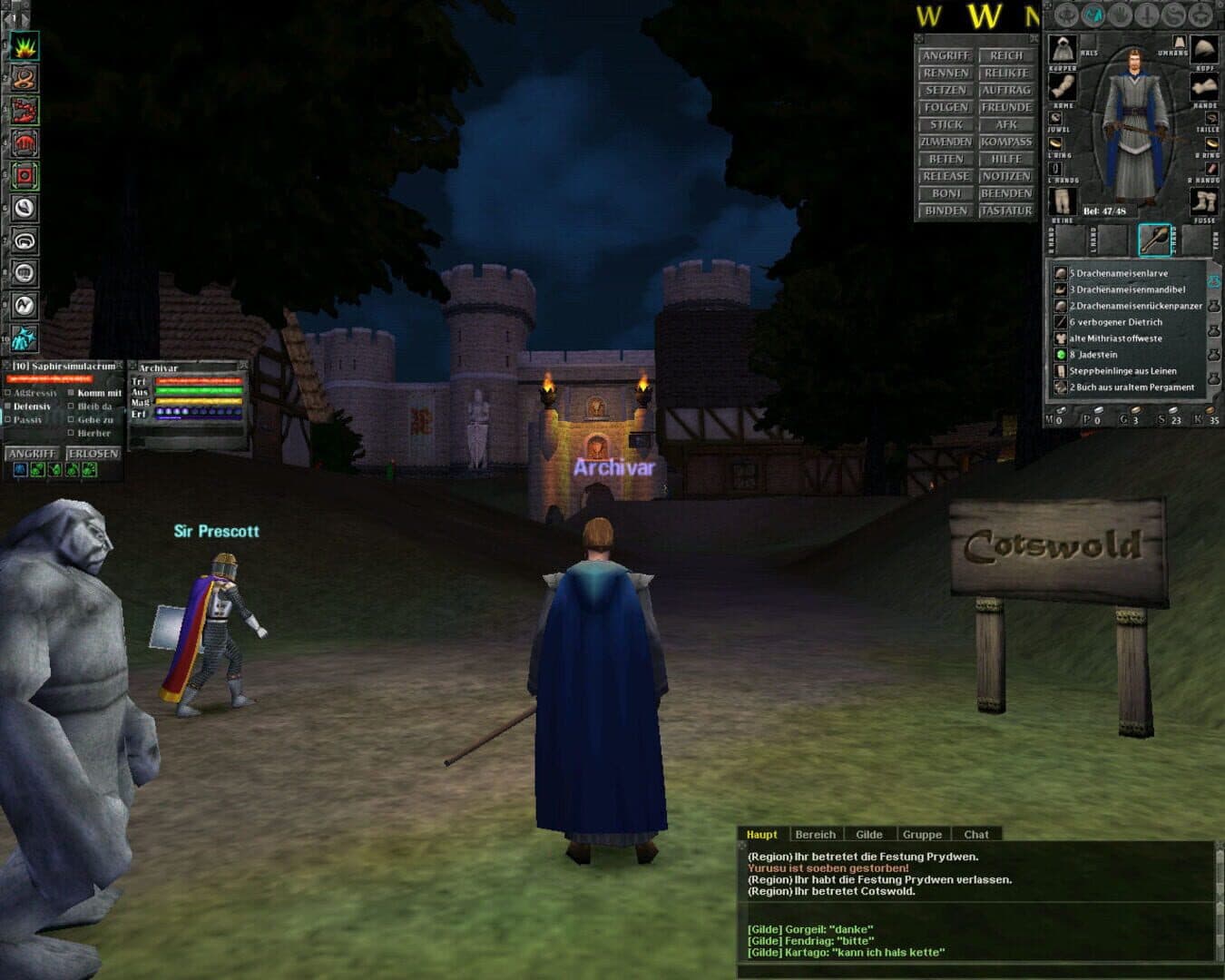
This is a 2001 game and it shows in everything that isn't the fighting: dated visuals, an awkward interface, an onboarding curve that quietly assumes someone in your guild will explain things, and PvE that today feels long and old-fashioned. The low population means the Frontiers can be empty outside peak hours, and that putting together an eight-player group depends heavily on the crowd you land with. In exchange it offers something no later MMORPG has fully replicated: a three-way war with real territorial consequences, an extremely high skill ceiling, and a small but deeply veteran community that knows exactly what it came for. Anyone after the best objective-based mass PvP the genre ever produced will find the game that set the standard here — and Endless Conquest makes it free to find out. Anyone after a comfortable, populated, modern MMORPG will be happier somewhere else.
Screenshots
Videos
Community reviews
Nobody has reviewed this game yet. You can be the first.