Elsword
About the game
Elsword is a free-to-play action MMORPG with an anime look that plays unlike almost anything else in the genre. Instead of the usual point-and-click over an isometric map, it uses a 2.5D side-scrolling perspective: you move through instanced dungeons like in a beat 'em up and chain combos with the keyboard. It's developed by South Korean studio KOG Studios, which launched it in Korea in 2007 and brought it West over the following decade, published by KOG Games in North America and Gameforge in Europe. It's available both on KOG's own client and on Steam.
What sets it apart
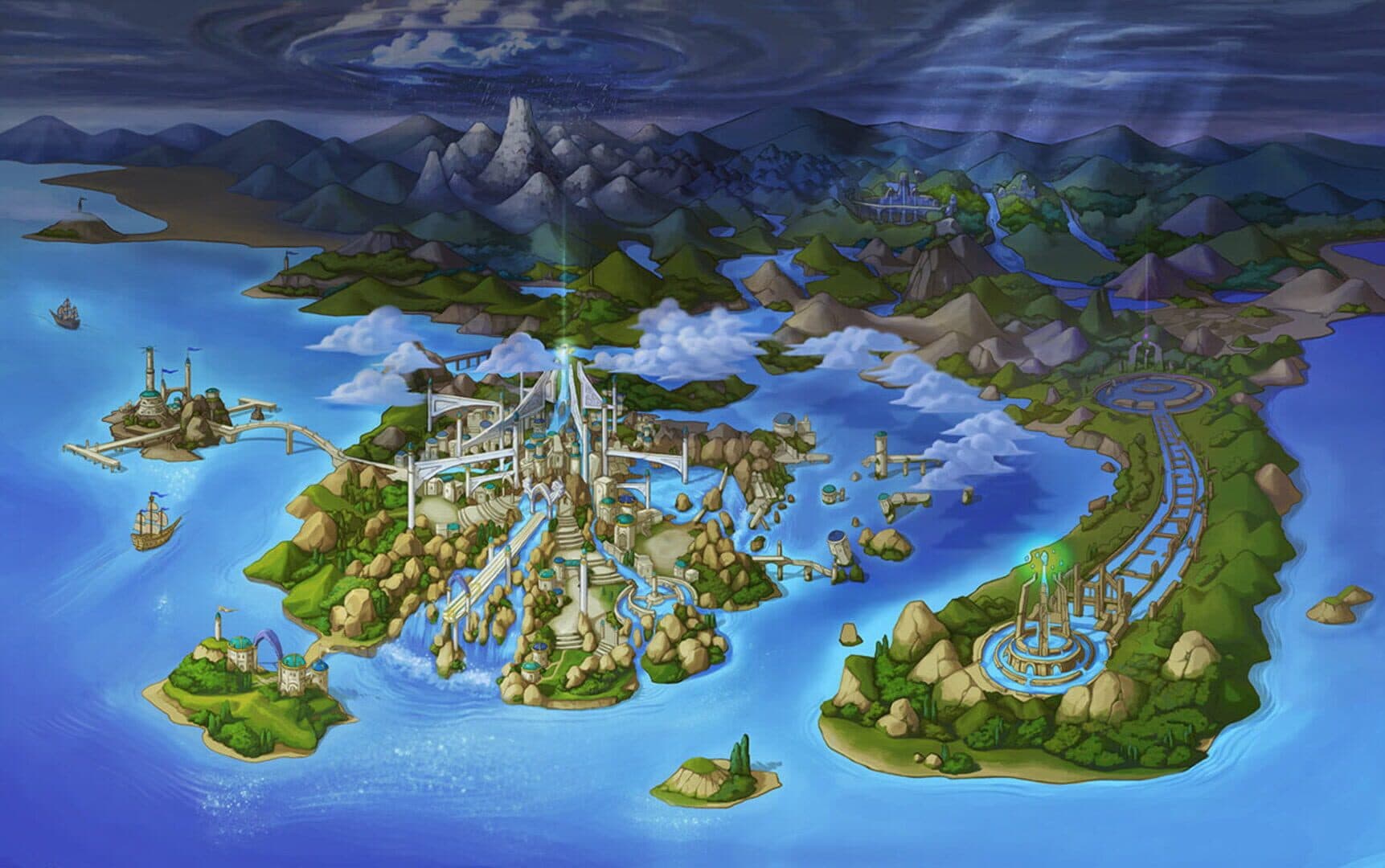
The heart of Elsword is its manual combat. Everything comes down to execution: movement, jumps, cancels and combos that lean on your reflexes rather than an automatic skill rotation. That gives it a skill ceiling closer to a fighting game or an action title than to a tab-target MMORPG, and it's why many players stick around for years. Around that system sits a whole world: Elrios, with a campaign that unfolds region by region, cooperative PvE, endgame raids and a competitive PvP scene with its own community.
The other big draw is the roster. There are fifteen playable characters, each with their own backstory and fighting style, and each opens four job-class paths that completely reshape how they play —roughly sixty classes in total, adding up to dozens of distinct builds. Progression runs through class advancements (at level 15, 35 and 99) and a Master Class with extra passives unlocked later in the campaign. Picking a character isn't a cosmetic choice: it defines the pace, the range and the difficulty of everything that follows.
Current state
Nearly two decades after release, Elsword remains live and actively supported, with very frequent patches —weekly or biweekly— published on the official site and on Steam. In early 2026 the game added the Mirror Del region, with new dungeons like Blight Treant and Monstrous Bird, plus content around Magmelia (megabosses such as the Spirit Lord's Temple) and the Abyss story raids. The most recent character is Lithia, a treasure hunter who wields curse magic. The player base clusters mainly around the raid endgame and PvP, with a steady cadence of events and store updates.
What you pay for and what you don't
The model is fully free-to-play: you download and play for free, with no subscription or upfront cost. Monetization runs through the Item Mall, using the premium currency K-Ching bought with real money. Most of the catalog is cosmetic —outfits and skins for each character, accessories, pets and mounts— plus convenience items: inventory slots, dungeon cubes and keys, EXP and drop boosters, and consumables. Up to that point, nothing stops you from progressing through the campaign. The fine print is in the endgame: the gear upgrade-and-enchant system pushes spending, and optimizing high-level gear clearly rewards those who pay. It isn't pay-to-win in the buy-the-victory sense, but it is a cosmetic-heavy model with a layer of monetized progression that becomes more noticeable the deeper you go.
Who it's for (and who it isn't)
Elsword is for players who enjoy mechanical execution: if you like action games, fighters or beat 'em ups and always found the MMORPG too automated, the combat here will hook you, and the sheer volume of characters and classes offers years of replay without repeating yourself. On the other hand, if you want a seamless open world, if a strong anime aesthetic puts you off, or if the endgame's monetized gear grind is a dealbreaker, it probably isn't for you. Working against it is its age: this is a 2007 game, with dense menus and an onboarding that shows the seams, plus an endgame economy built to retain and monetize. With all that in mind, it remains one of the most distinctive and enduring action MMORPGs around, still getting fresh content and characters.
Screenshots
Artworks
Videos
Community reviews
Nobody has reviewed this game yet. You can be the first.