Hack 'n' slash ARPG
Hero Siege
Panic Art Studios · Dark fantasy
StatusLive
ModelB2P
SpanishNo Spanish
Platforms
About the game
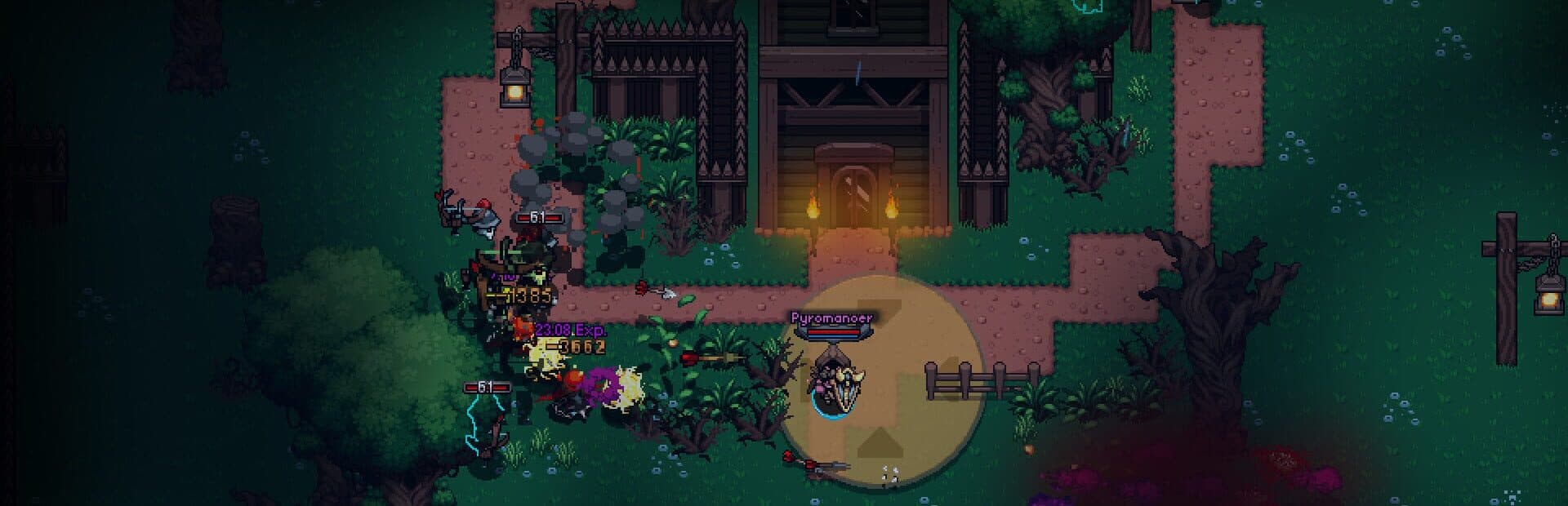
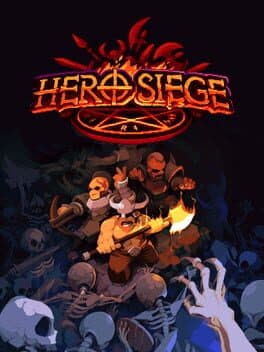
Hero Siege is a pixel-art hack 'n' slash ARPG from Finnish studio Panic Art Studios that crosses Diablo-style horde slaying with roguelike structure and an outright obsession with loot. It launched back in 2014 as a small game and, patch after patch, turned into a full live-service action RPG: today it carries more than a decade of systems stacked on top of one another. It's not an AAA production and never tries to be — this is pixel art, grinding and build experimentation, with all the weight and charm of everything it has piled up over the years.
What it is and what sets it apart
You push through several procedurally flavored acts: go in, kill everything, grab loot, upgrade and go back in stronger, leveling up and tuning builds across escalating difficulties. It's the genre's classic formula, wrapped in roguelike-tinged runs. You can play solo, in online co-op for up to four players, or even in local split-screen — something you rarely see in an ARPG.
Sheer content volume is its calling card: over twenty playable classes, hundreds of unique items, sprawling talent trees, runewords, crafting and a player-driven market for real-time trading. The game rebuilt itself from the ground up with the "2.0" rework, and since then it runs on a seasonal cadence, each season adding new classes, systems and bosses.
What you pay for (and what you don't)
Hero Siege is Buy to Play: you buy the base game once —it usually sits around $4.49 and frequently drops below $3 on sale— and there's no subscription. It's also sold as a four-pack and as a full bundle with classes and expansions. For years it piled up so much class-and-act DLC that it earned a reputation as a "DLC simulator." Since Season 9 (April 2026) the studio began walking that back: it folded six previously paid classes back into the base game (Amazon, Paladin, Samurai, Shaman, Demonspawn and Demon Slayer) and now sells only the most recent content, with players who had already bought those classes getting special skins as compensation. You can grab it on its Steam page.
Where it's at now
It's alive and in active development, on a seasonal rhythm. Season 9 landed in April 2026 on Steam and PS5 with the Incarnation Tree (a passive tree of 1,600+ nodes that opens at level 100 and replaces the old hero-level tree), an atlas-like Ether Tree of 400+ nodes, the new Prophet class and the uber boss Architect of Ruin. Season 10, "Ebontharn," is announced for August 21, 2026. Patches come often, with balance tweaks, experience scaling and endgame content. Population swings hard with each season launch: a recent one overshot expectations and saturated the servers, forcing the studio to double the capacity of its main one. It plays on PC (Windows, Mac, Linux), PS5, iOS and Android.
Who it's for (and who it isn't)
It's for players who love the loot loop: trying builds, hunting items and watching the numbers climb season after season, in sessions that don't demand a huge commitment. If pixel art and grinding are your thing, there's a decade of content waiting for you for less than the price of a coffee. On the flip side, let's be honest: the tangle of stacked systems can feel overwhelming for a newcomer, the pixelated look isn't for everyone, and being a small game from a small studio, it carries some rough edges and the server hiccups typical of every season launch. It isn't out to compete with the genre's AAA titles; it offers something else — messier, cheaper and more experimental. The rest is on its official site.
Screenshots
Artworks
Videos
Community reviews
A few more reviews and we'll publish the averageso far: 0 of 5
Nobody has reviewed this game yet. You can be the first.
Related news
1