ODIN: Valhalla Rising
About the game
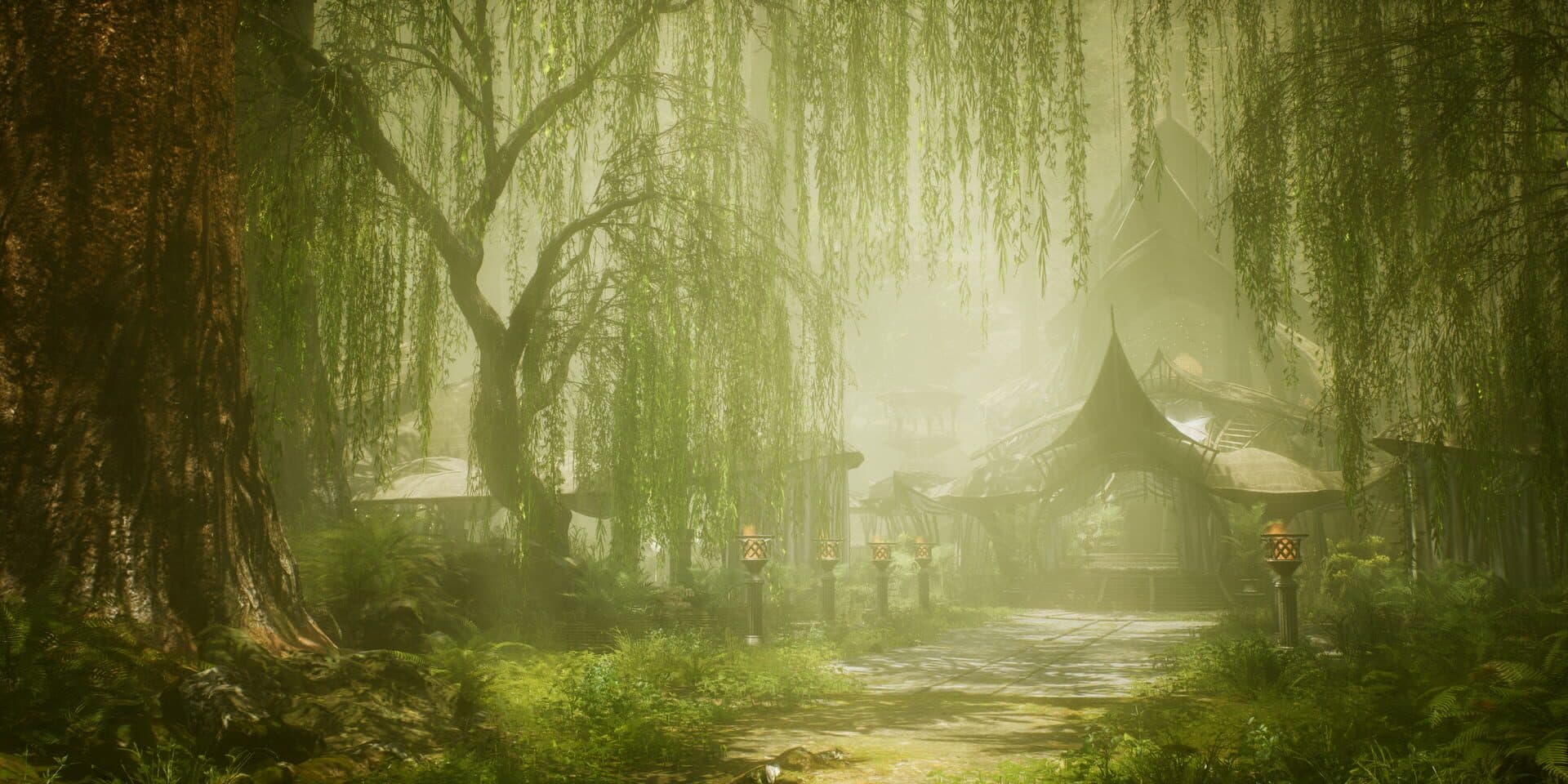
ODIN: Valhalla Rising is an open-world action MMORPG steeped in Norse mythology, developed by Lionheart Studio and published by Kakao Games. Its central idea is easy to state and hard to pull off: one seamless world spanning the Nine Realms —Midgard, Jotunheim, Muspelheim and the rest— with no loading screens between zones, and a visual finish that in 2021 reset what people expected from a Korean MMO and still holds up on a monitor. It launched in Korea on June 29, 2021, and only reached the West, on global servers, on April 29, 2025.
One world, three platforms
ODIN runs on Windows, Android and iOS from a single account, with genuine cross-platform play: the character you left on your desktop is exactly where you left them when you open the phone. The PC client is a free download from the official site —it is not on Steam or Epic— and mobile lives on the usual stores. That mobile origin shows for better and worse: the interface is built to work with a thumb, and the game assumes you will alternate between long desktop sessions and short bursts on the phone.
Classes, progression and the weight of automation
You start by picking one of four base classes —Warrior, Sorceress, Priest and Rogue— and each later branches into advancements that are what really define your role: Shieldmaiden, Valkyrie, Axler, Thunderbringer, the buff-and-debuff Bard on the Priest side, or the Sorceress's Alchemist. Progression is classic Korean MMO: levels, gear, runes and equipment enhancement matter far more than any skill tree. And it is worth saying plainly, because it is the first thing that surprises anyone coming from a Western MMO: a good chunk of your progress happens with auto-combat running. The game is built to farm by itself while you do something else, and the interesting decisions sit in what you build, where you stand and who you fight — not in each individual swing.
Mass PvP is the long game
Everything above exists to feed what actually sustains ODIN past the hundred-hour mark: open conflict over territory. Guilds fight over farming zones in plain sight, there are 30v30 clashes, guild content, base occupation and siege warfare. This is not closed-arena PvP with balanced matchmaking; it is the server-as-political-community model, where what matters is which guild you belong to, who you have pacts with, and what time your people log in. If that kind of social friction feels alien or simply irritating to you, ODIN will push you out sooner or later, because the PvE content is the road, not the destination.
What you pay for, and what you don't
ODIN is pure free to play: no entry fee, no mandatory subscription. The premium currency is diamonds, and on top of it sits a two-layer catalog. The visible layer is the convenient one: two tiers of season pass (a basic one around nine dollars and an expanded one closer to twenty-three), tiered avatar packs, and mount packs that can reach forty dollars. The layer that actually moves the needle is underneath: gacha for avatars, mounts and runes, summon tickets, and above all the gear enhancement system, with its protection consumables so a piece does not shatter when you push it a level higher. All of it is sold through the official Kakao Games shop.
The counterweight is player-to-player trading, so nearly everything in the shop can also be earned in game, and some players climb high while spending little. But the honest caveat is this: in PvP the paying player's edge is real and measurable, and it is the community's most repeated complaint — alongside the fact that even quest rewards tend to arrive wrapped in a gacha roll. You can play for free and enjoy it; competing at the top for free is a different conversation.
Where it stands: two versions at different speeds
The game is live and supported, but it helps to understand there are two ODINs. The Korean one, running since 2021 and well ahead, and the global one, opened in 2025, which advances by gradually folding in what Korea already has: advanced classes, systems, and entire continents like Muspelheim, with Surtr as its boss. The global update cadence has held up —seasonal content, new classes, annual roadmaps listing class change, domain defense, guild clashes and siege war— so if you jump in today you will find living servers and updates on the way, along with the persistent feeling of being one step behind the parent server.
The business context is less flattering, and it is fair to mention: ODIN racked up over 17 million downloads in Asia and was a commercial phenomenon for years, but revenue has been sliding and dragged its publisher into the red. The Korean version can still climb back to the top of the revenue charts when a big anniversary lands; the health of the global server, by contrast, depends heavily on that update rhythm holding.
Who it's for, and who it isn't
ODIN is for players who want a huge, good-looking, long-haul MMORPG they can keep up with from a phone when there is no time to sit down, and who value guild politics and territorial war over moment-to-moment combat. If you come from Korean MMOs and know what the package entails —auto-combat, enhancement with a real chance of destroying gear, an economy shot through with the shop— this is one of the most polished productions in the genre and a Norse world that is a pleasure to travel.
It is not for anyone chasing pure skill expression, horizontal progression or PvP balanced by design, nor for anyone who wants to hand-drive every fight: the system will keep nudging you to let the character swing on its own. And it is not for anyone unwilling to share a world with other people's spending, because at the competitive peak that spending shows. With those cards on the table, ODIN is a far more honest game than its shop suggests at first glance, and it remains one of the best doors into the Korean school of MMORPGs.
Screenshots
Artworks
Videos
Community reviews
Nobody has reviewed this game yet. You can be the first.