
StatusLive
ModelB2P+SUB
SpanishSubtitles, no voice acting
Platforms
Critics' score7.0
About the game
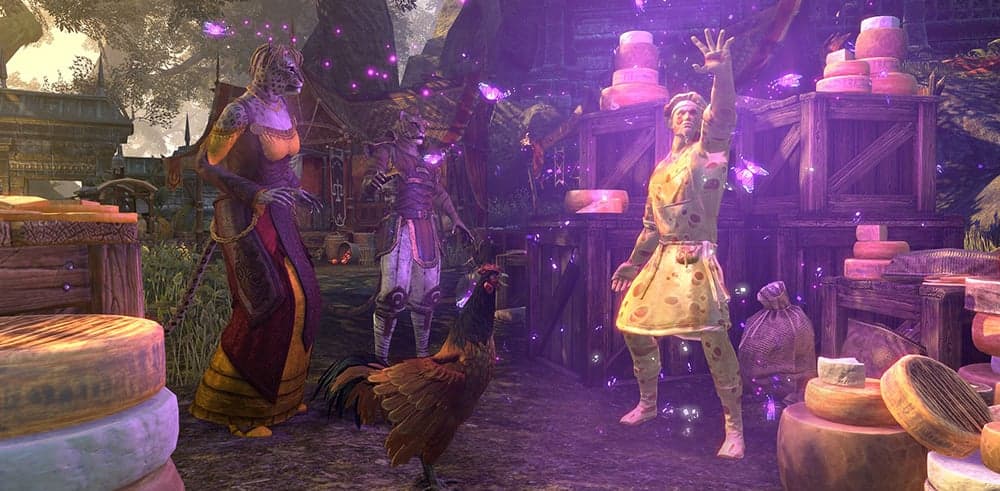
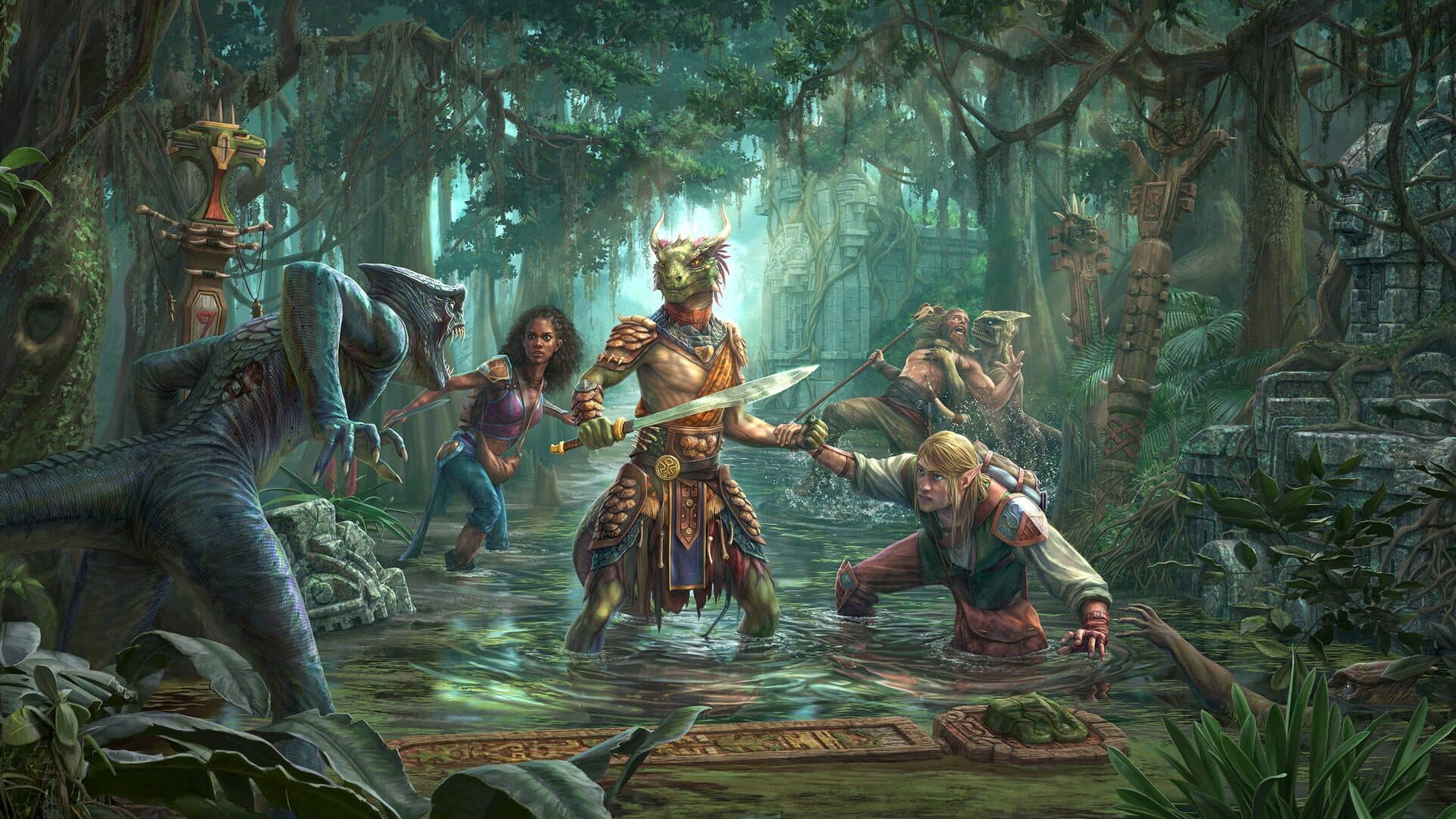
The Elder Scrolls Online (ESO) is the MMORPG that ZeniMax Online Studios built to carry Bethesda's RPG formula into a shared world. It takes place in Tamriel —the same continent as Skyrim, Oblivion and Morrowind— roughly a thousand years before the events of Skyrim, and its biggest strength is how faithfully it keeps the Elder Scrolls DNA inside an MMO: you can treat it as a huge solo RPG or as an online world to return to for years.
How it plays and what sets it apart
What separates ESO from other MMOs is how much it honors the series' freedom. Its zones are huge and explored at your own pace, every quest is fully voice acted, player guilds run their own economy, and progression is near-classless: you can mix weapons, skill lines and alliances almost however you want, without being locked into a fixed role. Grouping opens up the other half of the game —dungeons, twelve-player trials and the massive Cyrodiil PvP— but none of it is required to enjoy the main story.
What you pay for and what you don't
ESO is Buy to Play: you buy the base game once —often on sale or bundled in collections with DLC— and it doesn't require a subscription to play. The optional ESO Plus membership (~$14/month, cheaper on quarterly or yearly plans) unlocks every Crown Store DLC while it's active, adds unlimited crafting-material storage, a +10% progress boost and a monthly allowance of 1650 crowns; the details are in the official ESO Plus guide. Separately, the Crown Store sells cosmetics, mounts, loot crates and conveniences, and it's where the monetization is most noticeable.
Since 2026 the model shifted in the player's favor: seasonal content is free for everyone who owns the base game —including those coming in through Xbox Game Pass or PS Plus— and it added the Tamriel Tomes rewards pass tied to each season. In practice, you no longer need to buy a yearly expansion to keep up with the new content.
Where it stands today
ESO is live and actively supported. After a lukewarm launch in 2014, it grew into one of the biggest, most story-rich MMOs around, stacking chapters like Morrowind, Summerset, Elsweyr and Necrom. In 2026 it replaced yearly expansions with a calendar of roughly 90-day seasons: Season Zero: Dawn and Dusk kicked off the model, and from there the following seasons kept rolling out new zones, quest lines and events. The player base stays solid on PC and console, with story content as its center of gravity.
Who it's for (and who it isn't)
It's an easy recommendation for Elder Scrolls fans and for players who value story, atmosphere and exploration over leaderboards: there are hundreds of hours of voiced quests and a huge world you can roam almost entirely on your own. With the new free-seasons model, it's also cheaper to keep up with than before. That said, let's be honest about the downsides: combat feels softer and less precise than in other action MMOs, the competitive endgame and long-term retention are its weakest spots, and Crown Store monetization looms large the moment you start eyeing cosmetics and conveniences. If you want a role-playing MMO to live in Tamriel your own way, it delivers; if you're here for demanding combat or an elite endgame, there are better fits.
Screenshots
Artworks
Videos
Community reviews
A few more reviews and we'll publish the averageso far: 0 of 5
Nobody has reviewed this game yet. You can be the first.
Related news
7