About the game
Dofus is Ankama's tactical MMORPG — the work of a French studio that back in 2004 decided a massive online world could look like a hand-drawn cartoon and play like a board game. Two decades on, the bet still holds: in the World of Twelve every fight freezes the world, breaks it into turns and settles it on a grid of tiles where where you stand matters as much as which spell you cast. This is not an action MMO and never wanted to be.
Chess with spells
Every character starts its turn with action points and movement points, and that budget decides everything: close in or hold the line, break line of sight, shove an enemy into an obstacle, drop a summon to plug a corridor. The 19 classes aren't reskins of one template — the Iop brawls and hurts itself doing it, the Cra snipes from the far edge of the map, the Eniripsa heals and debuffs, the Sacrier turns its own health into a resource. Parties go up to eight characters, dungeons ask for keys and coordination, and the climb to level 200 is built from long quest chains, professions and the hunt for the six primordial Dofus, the dragon eggs the game is named after. Misread a fight and no amount of faster clicking saves it: you lose, and you learn.
A world players hold up
Almost nothing in Dofus comes from an NPC vendor. The economy is player-run: gathering and crafting professions produce the gear, potions and consumables everyone else uses, and prices swing in the marketplaces with whatever is happening on each server. Trading is a legitimate way to play — some people's endgame is the market — and dealing with other players is part of the design rather than a bonus: you haggle, you pull a group together for a dungeon, you join a guild, you pick a side between Bonta and Brâkmar for faction PvP. It also explains the deeply rooted multi-account culture: plenty of players run their own team of eight characters at once, which is why some servers allow it and others are strictly single-account. Picking the wrong one when you start changes the whole experience.
What you pay for
Dofus isn't free to play, even though you can start without paying. The client downloads free from the official site and Discovery mode lets you play with no time limit, but it's fenced into the starter areas — Incarnam and Astrub — with no advanced professions and no faction PvP. The full world unlocks with a subscription of around €5.99 a month, cheaper per month in the 3, 6 and 12-month packs (the yearly one sits near €58). A 7-day trial pass exists so you can check whether the pace suits you. The interesting wrinkle: the subscription can also be paid with Ogrines, the premium currency, and Ogrines can be obtained by trading kamas with other players — play and trade well enough and your month pays for itself. Alongside that there's a shop for cosmetics and services (outfits, pets, server transfers) that doesn't sell power. One common mix-up worth flagging: DOFUS Retro and Dofus Touch are billed separately and are not covered by the same subscription.
Where the game stands: the Unity era
In December 2024 Ankama shipped DOFUS 3.0, the full move of the client from Flash to Unity after months of beta, fresh servers included. The launch was rough — bugs, performance trouble, a loud community — and much of 2025 went into smoothing it out and into consolidating the server list, which went from 22 down to 6 (Brial, Rafal and Salar for multi-account; Dakal, Mikhal and Kourial for single-account, with Draconiros as the populated benchmark for one-character-per-player play). What's left is a game in active development with a visible plan: content is organised into seasons tied to the six primordial Dofus, major updates several times a year bringing class reworks, guild raids, a group finder, a dofusdex and quality-of-life the game had owed players for years. It even gained a twentieth class, the Bellaphone. It's no longer on Steam: you install and patch through the Ankama Launcher, it runs on PC, Mac and Linux, and it stays localised in Spanish, with the Spanish-speaking crowd sharing servers with everyone else. If you're returning after years away, the official migration guide covers what changed for your account.
It's worth knowing there are three Dofuses, and they aren't the same product. The main one is this: the 3.x branch on Unity, the one the seasons land on. DOFUS Retro is the classic 1.29 version preserved separately, with its own servers and its own subscription — it exists because plenty of players care about the game as it was in its early years, slowness and harshness intact. And Dofus Touch is the mobile adaptation, a separate product with its own economy and update schedule. All three share the World of Twelve, the Krosmoz universe that later produced Wakfu, the animated film and the series. Part of what makes Dofus worth playing now is exactly that: it's where all of it started, and twenty years of accumulated content are still on the map rather than shelved.
Who it's for (and who it isn't)
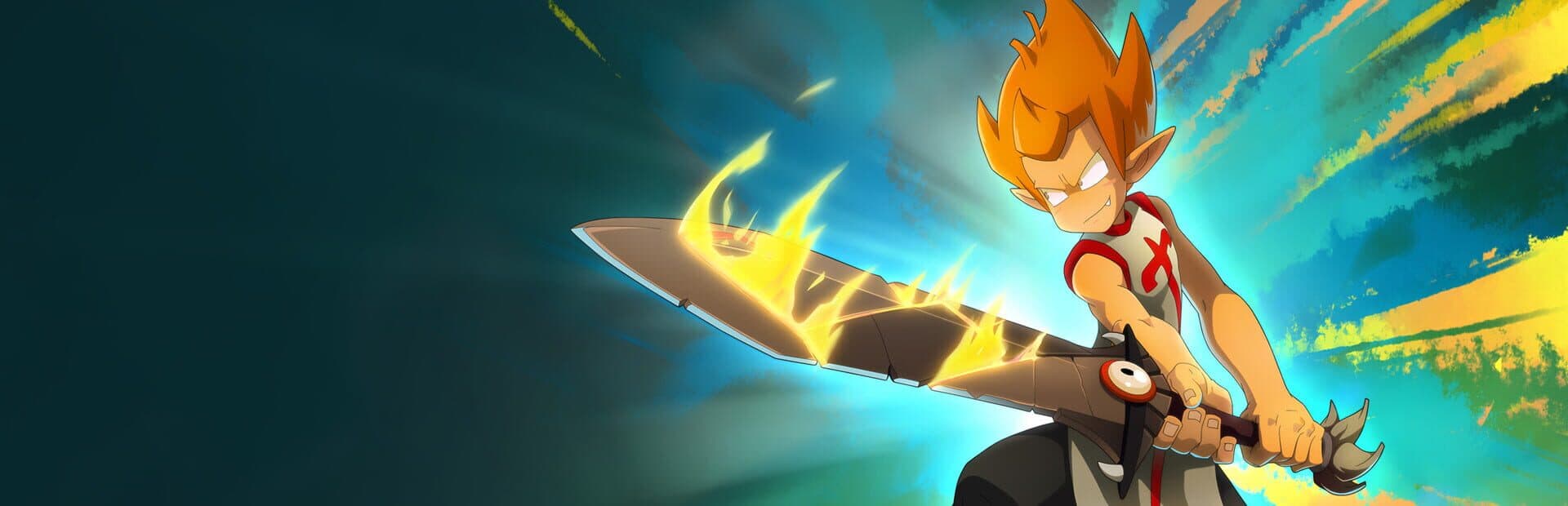
Dofus is for players who enjoy thinking a fight through: people who come from turn-based tactics, who have fun counting ranges and positions, who'd rather win by deciding well than by aiming fast. It's also for anyone who wants a genuinely social MMORPG, where the market, your guild and your reputation on the server weigh as much as your gear. And it's for players who value a game with two decades behind it: the sheer volume of content, professions, dungeons and quest chains is something no recent launch can match. The hand-drawn art, for its part, has aged far better than the 3D of its generation.
The downsides, plainly: it's slow. Resources get farmed, quest chains run long, and some content flat-out doesn't happen without a group, so playing solo in short bursts feels like an uphill fight. Multi-account culture puts single-character players at a disadvantage on the servers that permit it — which is why choosing a single-account server is the most consequential decision of your first five minutes. The interface is dense and the game still explains less than it should, reworked tutorial and all. The Unity era carries lingering performance rough edges on some machines, and the subscription is a real wall: Discovery mode is enough to sample the combat system, not to play Dofus. If none of that scares you off, few MMORPGs go this deep tactically — and none have been doing it since 2004.
Screenshots
Artworks
Videos
Community reviews
Nobody has reviewed this game yet. You can be the first.