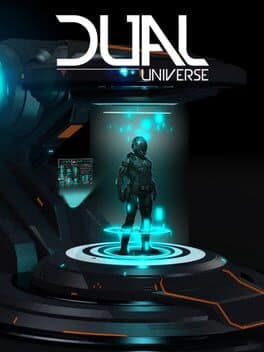
Dual Universe
About the game
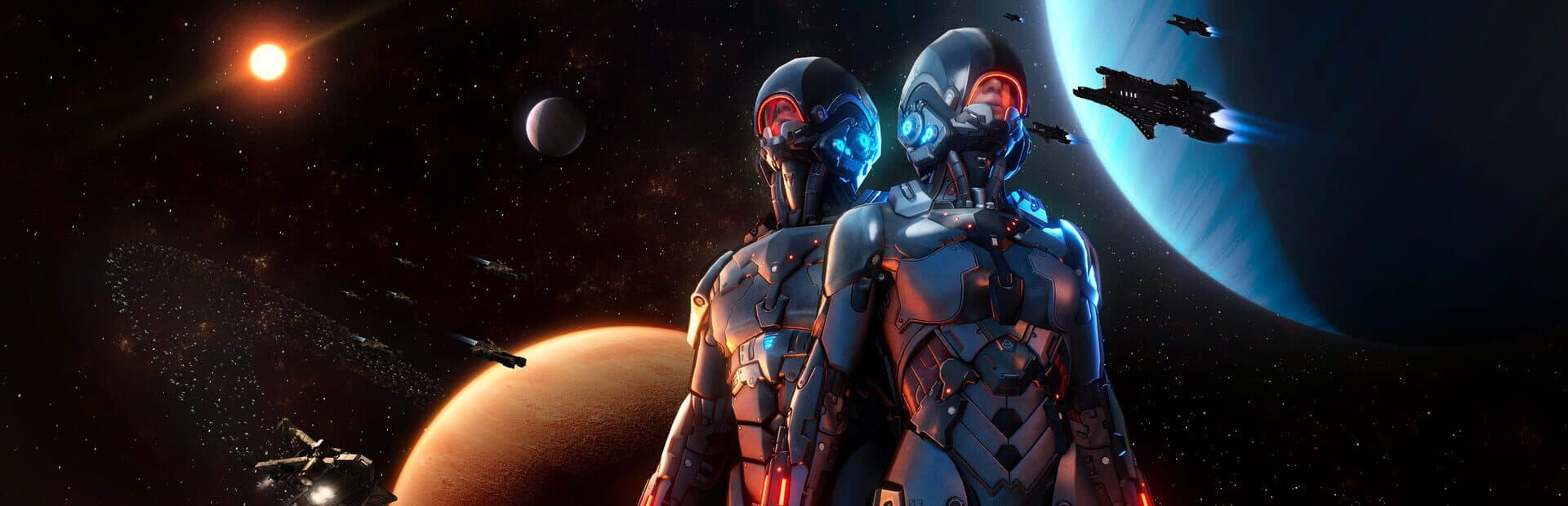
Dual Universe is a sci-fi sandbox MMORPG built out of voxels, and its ambition ran higher than almost anything else in the genre: one single shared universe, no instances or shards, where everything standing — from a mining shack to an orbital station — was put there by a player, block by block. Novaquark funded it on Kickstarter in 2016, kept it in alpha and beta for years, and launched it on September 27, 2022 on an enormous promise: an emergent civilization, with an economy, politics and warfare built by the people living in it.
A universe made by hand
The voxel is the whole toolkit: you mine terrain, refine the material and build whatever you want out of it, with no prefab blueprints in the way. Ships are designed part by part — hull, engines, tanks, wings — and scripted in Lua, so a pilot can wire up their own instrument panel. Planets can be drilled to the core, markets are run by players, and organizations claim territory with actual structures rather than a menu entry. The honest loop, though, is mine, refine, manufacture and sell through very long industrial chains: if that engineering grind is your idea of fun, there is nothing else quite like it, and if you came for guided adventure, you run straight into hostile onboarding and PvP that never got finished.
What you pay for, and what you don't
The MMO launched with the most expensive model available: buy the game (roughly 25 to 40 USD depending on the edition) and pay a subscription on top, somewhere between 7 and 14 USD a month depending on the plan. That arrangement ended along with the official servers, and unused subscription time was refunded through the payment processor. The only way in now is myDU, the standalone client Novaquark released in August 2024: a one-time 34.99 USD purchase on the official store, no subscription and no Steam, since the game was delisted there. Server files are a free download from your account, so the total cost comes down to one licence per player even if your group runs its own shard. One thing that stung the community: myDU was not included for people who had already bought the MMO, so veterans had to pay for it separately.
Where it stands: the MMO closed, the game didn't quite
Novaquark switched off the official server on August 27, 2025, nearly three years after 1.0 and with a population that never took off. What survives is myDU: you host your own shard or join a community one, with C# server mods, PvP that server owners toggle in the config, and a studio estimate of 10 to 25 concurrent players per CPU core. Blueprints can travel from the old MMO into myDU, but not the other way around. Public aggregate counts sit around 75 to 130 concurrent players: a niche community, steady, and nowhere near a populated MMO. The studio stopped producing new content, maintains the server mods repository and announced OpenDU, its intent to release client and server under an open licence — still an exploration with no date, held up by third-party proprietary tech baked into the engine.
Who it's for (and who it isn't)
It's a game for the builder-engineer type: someone who enjoys designing a ship that actually flies well, automating a factory, writing a script to solve a problem of their own, or raising a base with a small group of friends. On myDU that crowd gains something that matters: the server is yours — tune the economy, turn PvP off, load mods, play privately without depending on anyone else keeping the lights on. In practice it's the cheapest and most controllable way to enjoy the engine Novaquark built.
It's not for anyone looking for a living MMO. The original promise — a single universe with thousands of people building a shared civilization — died with the official servers, and no community shard replaces it: without critical mass there's no real economy, no territorial war, none of the market pressure that made overproducing worthwhile. The old rough edges are still there too: uneven performance wherever a lot has been built, a steep learning curve, and systems left half-finished. What Dual Universe is now is a remarkable piece of engineering wrapped around an idea the industry still hasn't managed to pull off, kept alive by the people who care about it. Go in knowing exactly that, and it's worth the trip.
Screenshots
Artworks
Videos
Community reviews
Nobody has reviewed this game yet. You can be the first.