Flyff Universe
About the game
Flyff Universe is the official rerelease of Fly for Fun, the 2004 Korean MMORPG that made its name on one simple idea: from level 20 onward you leave the ground and fly around on a broom or a hoverboard. Gala Lab and French studio Sniegu Technologies rebuilt it on a custom 3D engine that runs inside a browser tab, so you just open the official site and play — no download, no installer — and the same account follows you to PC, Mac, Android or iOS. You can even start on a guest account and register it later.
Flying, job ladders and a whole lot of grinding
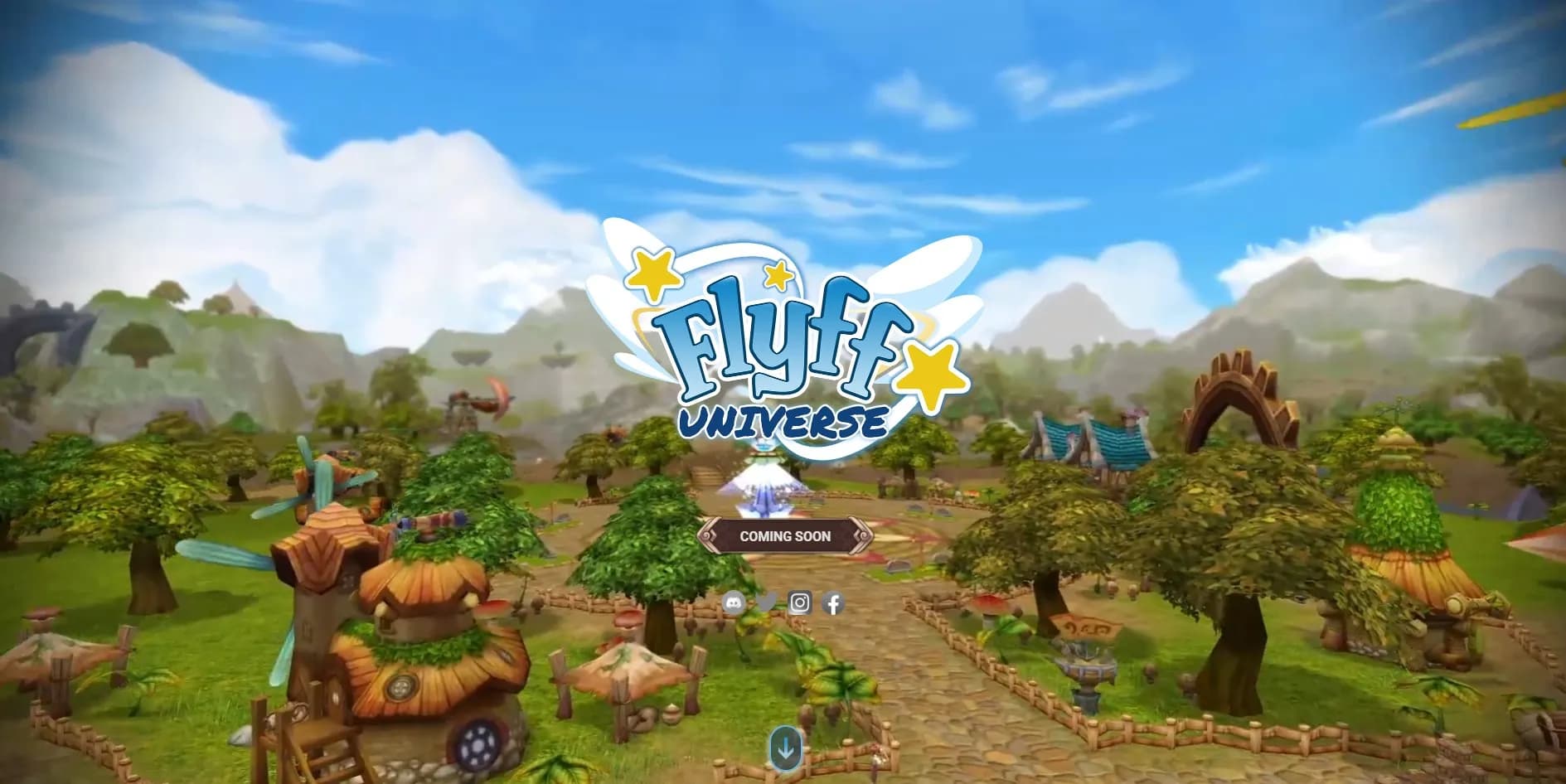
The world of Madrigal kept the original's anime look — saturated colors, big-headed characters, zero grimdark — and it kept the progression too. You start as a Vagrant, pick a class at level 15, specialize at 60, and in the late game move into one of the eight third jobs (Templar, Slayer, Harlequin, Crackshooter, Seraph, Forcemaster, Mentalist and Arcanist), each with its own master and synergy skills. The level cap sits at 190, and free flight is still what defines the whole thing: it isn't a fast-travel shortcut, it's simply how you get around.
The pacing is unapologetically old school: kill a lot, level slowly, lean on other people. Ringmaster buffs completely change how fast you climb, player-run shop stalls act as the real marketplace, and your guild is what sustains the long game. Higher up there are dungeons, towers you clear floor by floor, a solo boss rush with weekly rankings, sieges, the Madrigal Tournament and a yearly world championship with an in-person final. If the communal grind of mid-2000s MMOs reads as a flaw to you, this won't change your mind; if it reads as the point, it survived here untouched.
What you pay for and what you don't
It's free to play with no subscription and no paywalled content: there are no zones, quests or level caps sitting behind a wall. Monetization runs through the Item Shop and its premium currency, fCoins, and what it sells is mostly convenience and cosmetics: weapon skins, wings and elemental effects, a wardrobe system, auto-gathering pets, inventory and bank expansions, EXP and drop boosters, and monthly reward passes. A good chunk of that catalog is also available for Penya, the in-game currency, or by buying it off other players.
The debatable part is the same one Flyff has always had: the scrolls that protect your gear while upgrading it are bought with real money, which makes high-level enchanting far cheaper if you pay. It isn't straight pay-to-win — no stats or combat-exclusive items for sale — but it is a tax on efficiency, and the last stretch of enchanting feels heavy if you play strictly for free.
Where the game stands
The game is live and actively supported. The Muran's Awakening expansion, which started rolling out in late 2025, was the biggest jump since the relaunch: it raised the level cap to 190, opened the continent of Kaillun and the city of Eillun, and introduced the third jobs alongside a new dungeon. The follow-up drops added high-level farming zones, open dungeons, PvP gear, extra floors of the Forgotten Tower, server-wide EXP and drop buffs, and even a dark UI theme. The rhythm is weekly maintenance with a patch or an event attached, plus seasonal events — the official news feed is the best way to gauge how fast it's moving at any given time.
The flip side is scale. There are nine permanent servers plus a seasonal one dedicated to the championship, but the population is modest: the game reported over 800,000 accounts created after the relaunch, while daily activity estimates point to a few thousand players, with much of the Flyff scene still scattered across private servers. The team opened a public known-issues board and promised a formal roadmap that took a long time to materialize: communication has improved, but this is still a small project with small resources.
Who it's for
Flyff Universe is for anyone who wants a classic MMORPG with zero friction at the door: open a tab, roll a character, fly. It works beautifully as a side game — mobile support helps a lot — as a nostalgic reunion with the original Flyff, or as a first MMO for someone unwilling to install a hundred gigabytes. What it isn't: a blockbuster. The systems are old, combat is simple to the point of repetition, the localization has rough edges, and the endgame rests on farming and community rather than brilliant design. Taken for what it is — a small, colorful, unhurried MMO — it delivers; taken as the genre's next big leap, it disappoints.
Screenshots
Videos
Community reviews
Nobody has reviewed this game yet. You can be the first.