Star Wars Galaxies: An Empire Divided
About the game
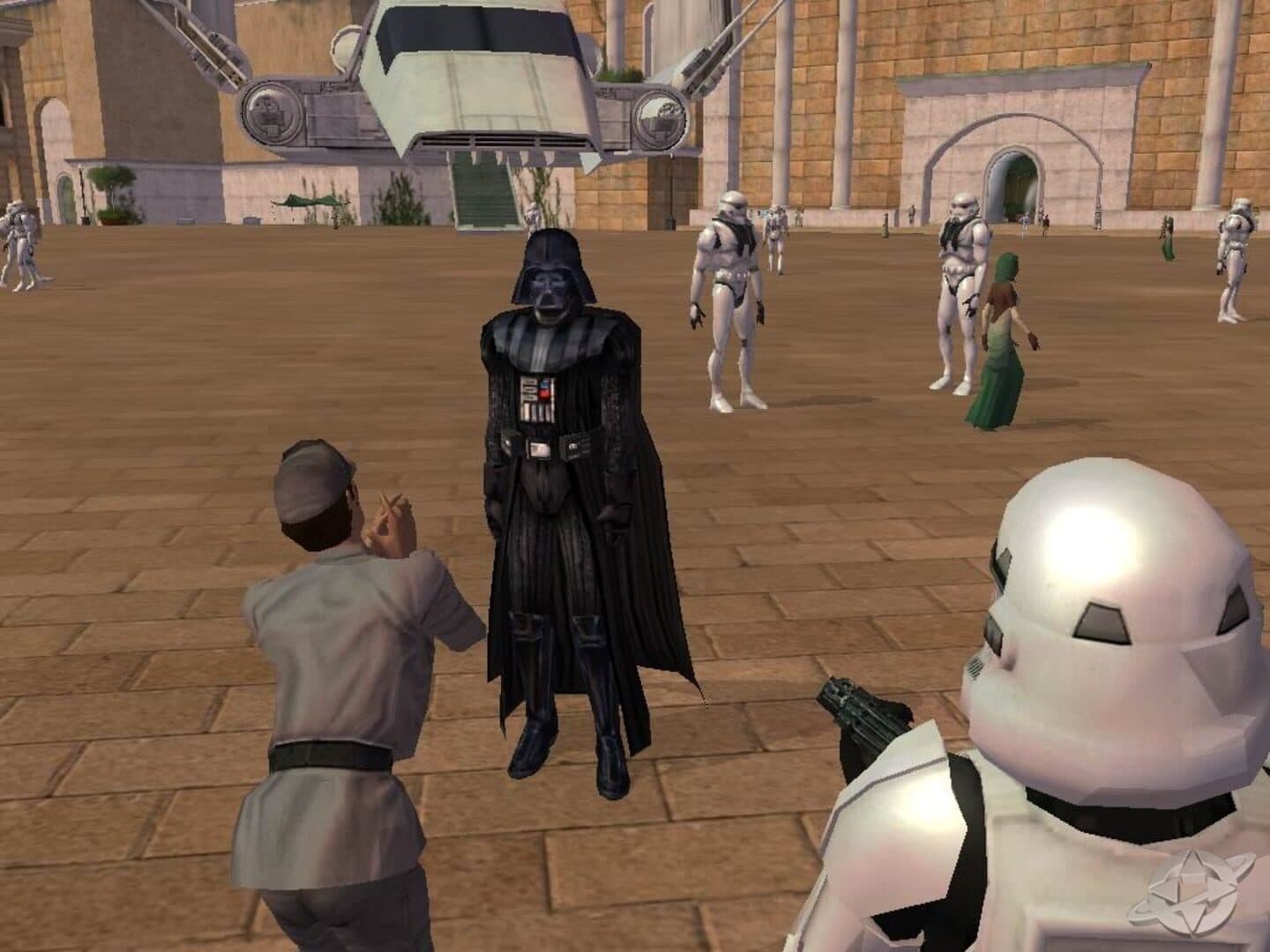
Star Wars Galaxies: An Empire Divided was the first MMORPG set in the Star Wars universe, and more than twenty years after its 2003 launch it is still the yardstick every sandbox MMO gets measured against. Sony Online Entertainment built it against the grain of its contemporaries: instead of pushing you down a rail toward max level, it dropped you into an eleven-planet galaxy set between A New Hope and The Empire Strikes Back and let you decide what you wanted to be in it. You could go your entire playing life without firing a shot and still matter.
A galaxy built by its own players
There were no locked classes. Your character learned individual skill boxes across thirty-plus professions —rifleman, doctor, dancer, architect, bounty hunter, ranger, musician— and you could mix them into a role that appeared on no menu anywhere. Plenty of those professions had nothing to do with combat: crafters made their living building things, musicians and dancers healed everyone else's mind wounds in the cantinas, and that made them people you wanted on your good side. The Jedi was that philosophy taken to its limit: not a pick at character creation but a secret nobody fully cracked for months, and unlocking it painted a bounty hunter's target on your back.
The other pillar was the economy. Nearly every piece of gear came out of another player's workshop: resources spawned across the planets with shifting stats and a limited shelf life, crafters hunted them down, refined them and signed what they made, and the market actually worked because nobody could route around that loop. On top of that economy grew the player cities, raised by guilds on open terrain, complete with elected mayors, hospitals, cloning facilities and player-run shops. The Jump to Lightspeed expansion added pilotable, customizable ships and space combat in 2004 — near enough a separate flight sim bolted onto the ground game.
The overhaul that split it in two
2005 brought the two changes that defined its reputation. First the Combat Upgrade, which rebuilt combat wholesale; then, that November, the New Game Enhancements: the mix-and-match profession system was replaced by nine fixed classes, Jedi became a starting option, and the whole game was steered toward direct action. It was a foundational rewrite dropped on a live MMO and on people who had spent two years building characters that ceased to exist. Much of the community walked, and the NGE became the textbook case —still cited today— of how not to overhaul a running game. LucasArts and SOE switched off the official servers on December 15, 2011, as the license expired and The Old Republic took its place.
How you play it today: free, and entirely unofficial
Back in the day the model was box plus subscription: you bought the game, paid around $14.99 a month with quarterly and annual discounts, each expansion sold separately, and by the NGE era a real-money item shop had been added on top. None of that still exists. There is no official version on sale: the game isn't on Steam, isn't on GOG, isn't on any digital storefront, and there are no patches, no support and no announced re-release. The only way to play it is through community-run servers, which are free, charge no subscription and survive on donations; the client comes from those same projects.
Each emulator is anchored to a different era of the game, so picking a server also means picking a version. SWG Legends recreates the NGE era, has the most content and the highest update cadence, with reworks of classic zones, modernized housing-decoration tools and seasonal events. SWG Restoration runs its own build with a distinctive Jedi unlock system and generally posts the highest population on community trackers. SWG Infinity flies the pre-CU flag — the game as it was before the 2005 overhauls — and is the way in for anyone who wants the original profession system and nothing else. None of them carry Lucasfilm's blessing: they exist on tolerance, and both their population and their future rest on volunteers.
Who it's for (and who it isn't)
It's for anyone after an MMO where the content is generated by the other players: real economies, non-combat trades, houses and cities of your own, and an identity you build by choosing rather than picking off a list. If you've ever read about social sandboxes and wanted to see the original, it's still there and it still works. It's also a rare case of a game you can try without spending anything, with a small but knowledgeable community that tends to look after newcomers.
What you shouldn't expect is comfort. This is a 2003 game and it shows everywhere: a cluttered interface, stiff animations, long journeys, systems that explain themselves badly or not at all, and a crafting grind that's either a whole hobby or a brick wall depending on your temperament. The good documentation is scattered across community hands. And there's a structural fragility worth keeping in mind: you're playing on unofficial servers with no guarantees, kept running by people doing it in their spare time. Go in knowing that, and it's one of the most distinctive things you can play in the genre today.
Screenshots
Videos
Community reviews
Nobody has reviewed this game yet. You can be the first.